Invasion
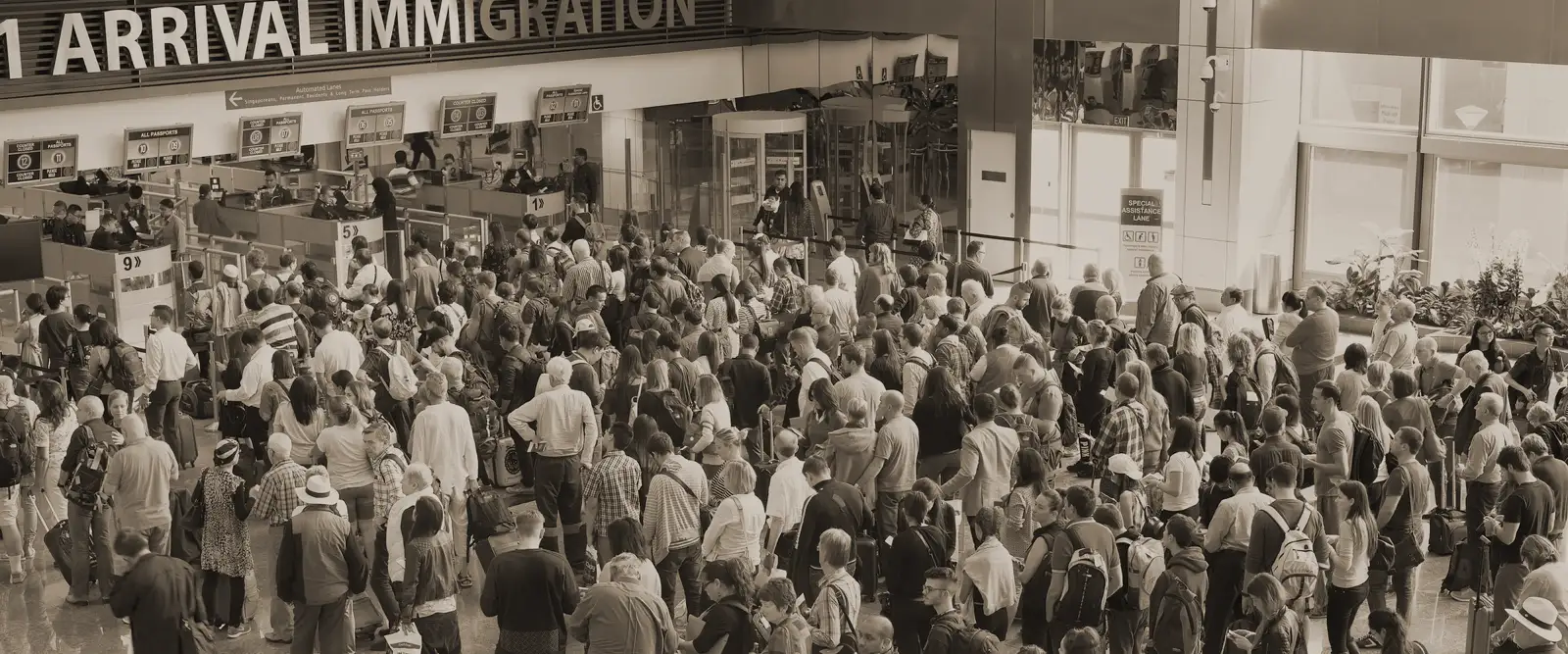
Socioeconomic, Cultural, and Political Ramifications
The aftermath of World War II marked a pivotal turning point in the history of migration to the Global North. The devastation wrought by the war was unprecedented, and as economies rebuilt, the demand for labour prompted the opening of borders to millions from the Global South seeking new opportunities. While this influx of migration contributed to economic growth, it was initiated with little consideration for the long-term socioeconomic and cultural impacts on the European heritage populations who had called these lands home for centuries.
Post-war Europe, in particular, saw a deliberate policy shift to attract foreign workers to fill the void left by wartime losses and to fuel rapid industrial expansion. Countries such as Germany, France, and the United Kingdom entered into guest worker agreements with nations across the Mediterranean, Asia, and Africa. Similarly, the United States liberalized its immigration laws in the 1960s, opening the gates to non-European migrants at an unprecedented scale. The Left-Liberals often justified these policies in the name of economic necessity and humanitarian obligation, but the broader implications for social cohesion and cultural continuity were deliberately overlooked. All the Left-Liberals wanted was just a short-term solution to the labour shortage, without a full appreciation of its far-reaching consequences.
Over the decades, successive Left-Liberal governments in the Global Northchampioned multiculturalism as a guiding principle, believing that diverse societies would enrich national identities and foster global cooperation. Yet, in doing so, they frequently marginalized or dismissed the concerns raised by segments of the European heritage population. Many felt that their cultural traditions, values, and even their sense of security were being eroded by rapid demographic change. Instead of addressing these anxieties, political leaders labelled such expressions as xenophobic or regressive, further alienating a significant portion of the electorate. The refusal of political elites to listen and respond to these concerns has led to a dramatic shift in the political landscape, one that continues to shape the future of the Global North.
This persistent minimization of legitimate concerns created a fertile ground for the resurgence of nationalist sentiments. In recent years, political movements across the Global North have gained traction by promising to restore national sovereignty, protect cultural heritage, restrict immigration, and Mass repatriation of non-Europeans. These movements draw on the deep wells of frustration that have built up over decades, breaking down previous political barriers and igniting a populist wave. As a result, in the 2020s across the Global North, those feelings haveunleashed a flood of nationalist sentiments not seen since the Nazi era.
The rhetoric is often charged, and while it sometimes echoes troubling aspects of the past, it also reflects genuine, deep and well-funded anxieties about the future of national identity and social stability.
The Negative Effects of Mass Migrations on Western Culture
Mass migration has had a multipronged negative impact on the Global North, particularly European culture. In Europe, Mass migration began after WWII when both East and West Germany were flooded with cheap labour from the Global South. In West Germany, the aim was to reconstruct and rejuvenate the country very rapidly, which was beyond the capabilities of the surviving population. Hence, the floodgates of Mass migration were opened. This was further amplified in the 1990s, when millions were admitted to Germany and other European countries.
In America, the process began with the Emancipation Proclamation, issued by Abraham Lincoln on January 1, 1863. This was gradually followed by Blacks exiting the restricted areas and moving freely across the country.
The second phase of Mass migration was the Mexicans. Mass migration of Mexicans to the US began in the early 20th century, particularly between 1910 and 1930, driven by the Mexican Revolution and labour demands. Large-scale, sustained migration accelerated in the 1940s through the Bracero Program, which admitted more than 4 million workers between 1942 and 1964. Following the end of the Bracero Program and changes in US immigration law, migration became more permanent and family-based, with one immigrant with permanent resident status able to sponsor many to enter the US legally. This led to massive increases in the number of Mexicans in the 1970s and beyond.
It is nakedly evident that Mass migration became an accepted norm among Left-Liberals across the Global North, encouraging further influxes. In the present era, we see the results of those reckless policies.
One concern is the rapid erosion of traditional values and customs, as Mass migrations have introduced cultural norms that differ significantly from those of the host society. This has led to tensions between groups, thereby affecting social harmony, as is evident across the Global North.
Another issue is the strain on public services, including education, healthcare, and housing. Rapid population growth has overwhelmed existing infrastructure, resulting in overcrowded schools, longer wait times for healthcare, and increased competition for affordable housing. These pressures have fostered resentment among local populations and complicated efforts to maintain a sense of communityas perceived by the Left-Liberals.
Most importantly, Mass migration has contributed to political polarization, as debates over immigration policy and cultural identity have become more prominent. This has led to the rise of Far-Right movements and heightened social divisions, making it more difficult to reach consensus on important societal issues.
Mass migrations have had a significant impact on Western culture, shaping its social, economic, and political landscapes. The influx of diverse populations has contributed to the deterioration of Western societies, prompting new perspectives on the demise of European heritage.
This, in turn, has generated tensions over identity, employment, and resource allocation, prompting public debates about multiculturalism and national values.
The increase in crime across all categories has become a significant concern for communities, affecting public safety and the overall sense of security. These rising crime rates across the Global North coincide with Mass migration as the driving force. This population shift, in turn, gives rise to new social, cultural, and political factors. The combination of these trends has created new challenges for law enforcement and policymakers, necessitating comprehensive strategies to address both the causes and consequences of heightened criminal activity and population movement.
This widening chasm has, in certain instances, contributed to the rise of extremism on both sides. Some members of host societies react with hostility or exclusion, which is the natural response under the circumstances.
A range of cultural factors influences crime rates in many regions. Governments in the Global North continue to grapple hopelessly with complex challenges related to crime and Mass migration, and responses vary widely across countries. Ongoing debates among Left-Liberals do not focus on evidence-based approaches or addressing root causes to enhance public safety.
In recent years, the White population in the Global North has responded to rising crime rates among migrant populations by aligning itself with Far-Right political parties. These parties position themselves as responsive to public concerns about security and immigration, providing a platform for voices that feel unheard by mainstream political groups.
The polarization between the White population and the rest of society across the Global North has become markedly evident since the early 1990s.
Although many reliable sources in the Global North warn politicians of impending civil wars, neither the politicians nor the majority of the population pays attention. This is despite growing signs as foretold by credible government sources. The lack of response raises questions about political will and the effectiveness of early warnings. Furthermore, the disconnect between experts and decision-makers exacerbates the risks, allowing underlying tensions to escalate unchecked.
Some experts from military and secret services argue that the early stages of civil wars are evident in certain regions of the US and Europe, where law enforcement faces significant challenges. Sharp rise in gun violence, overflowing prison population dominated by non-Whites, and staggering statistics on the crime rates enhance these observations. In addition, there are areas within the major cities across the Global North which are referred to as “NO-GO zones” and are under the control of both legal and illegal immigrants. The complexity of policing in these districts has sparked ongoing debate, public safety concerns, and social cohesion.
Classification of Middle Eastern and North African Populations as “White” in US Federal Standards
Intellectual, Scientific, and Political Implications of Census Designation
The classification of Middle Eastern and North African (MENA) people as “White” by the U.S. Census Bureau and federal standards raises significant concerns about intellectual, scientific, and political honesty. This categorization is not merely a bureaucratic detail; it shapes how the authentic Whites perceivedthese communities within American society. By continuing to label MENA populations as “White,” authorities ignore the unique cultural, historical, and social realities of the population with a European heritage. Hence, perpetuating a misleading narrative that has far-reaching consequences.
Politically, the continued misrepresentation of MENA people as “White” serves to minimize the Whites’ struggles and silence their voices by enhancing the White population through openly fraudulent means. The Left-Liberals are trying to lull the underlying concern that the White population, as a percentage, is declining very rapidly due to falling birth rates and mass migrations.
This unchallenged fraud enables the Left-Liberal camps to avoid seeking solutions to address the declining White population.
The Rise of Left-Liberalism in the Global North After World War II
From Postwar Ideological Shifts to Contemporary Exposures of Adversarial Influence
The conclusion of the Second World War marked a profound turning point for public sentiment and political alignment across the Global North. The scale and horror of Nazi atrocities, revealed in full during the liberation of concentration camps and the Nuremberg Trials, catalyzed a widespread re-evaluation of prevailing ideologies. Societies disillusioned with authoritarianism and fascism sought new frameworks to ensure peace, human rights, and social justice, leading to the meteoric rise of Left-Liberalism as a dominant force in Western political thought.
Rise of Left-Liberalism: Public Sentiment and Ideological Appeal
In the wake of the war, Left-Liberalism, with its emphasis on civil liberties, social welfare, and equality, resonated deeply with populations traumatized by the brutality and intolerance of fascist regimes. The postwar period saw significant expansion of welfare states, universal healthcare, and the recognition of minority rights in the Global North. This shift was fuelled by both foreign-influenced grassroots movements and intellectual currents advocating policies to prevent the recurrence of totalitarian abuses.
The Soviet Union’s Role: Support and Financing of Ideologies
While Left-Liberalism in the Global North often drew on domestic traditions of reform, the Soviet Union played a complex covert role in supporting leftist movements. Seeking to expand its ideological influence, the USSR provided financial, organizational, and propaganda support to socialist and communist parties throughout the Global North. Soviet-backed cultural initiatives, media campaigns, and espionage operations were designed to cultivate sympathy for socialist ideals and to undermine confidence in capitalist democracies.
Later Influences: Involvement from the Middle East and China
As the twentieth century progressed, the ideological contest expanded beyond the original participants in the Cold War. Revolutionary movements and governments in the Middle East, and later the People’s Republic of China, began to exert their own influence on Left-Liberal and radical-left circles in the Global North. Financial and logistical support for activist groups, disinformation campaigns, and ideological exchanges were used to promote anti-Western narratives.
Attacks on Western Democracies: Methods and Consequences
The hostile states frequently targeted Western democracies through a combination of overt and covert means. Disinformation campaigns, infiltration of political organizations, and the use of sympathetic front groups aimed to sow discord, polarise public debate, and erode trust in democratic institutions. The consequences included heightened suspicion, political fragmentation, and, at times, the marginalization of legitimate dissent as authorities sought to respond to real and perceived threats, many of which were indistinguishable.
McCarthyism: Historical Responses to Criticism
The early Cold War period saw the rise of McCarthyism in the United States—a climate of suspicion and aggressive investigation targeting those accused of communist sympathies. Criticism of Western governments or advocacy for left-leaning policies was frequently labelled as subversive, chilling open debate and damaging reputations. While McCarthyism is now widely criticized by the Left-Liberals for its overreach and disregard for civil liberties, the era highlights the challenges democracies face in balancing national security with freedom of thought and association.
Present Day: Adversarial Influence
In recent years, investigative journalism, declassified intelligence, and academic research have shed new light on the extent of adversarial influence in the Global North. Public awareness of foreign interference—from cyber operations to funding of universities and activist networks—has grown, leading to increased scrutiny and countermeasures by governments and civil society. In the 2020s, some 70 years after the war, the Global North is witnessing the extraordinary powers of Left-Liberalism, accompanied by its ever-worsening socioeconomic decline.
Foreign Interference and Political Manipulation in the Western World: Impact and Future Risks from the Global South Countries
Cases Involving Iran, Saudi Arabia, Qatar, Russia, and China
Foreign interference and political manipulation refer to deliberate actions undertaken by external states or non-state elements to influence political processes, public opinion, or governance structures in another country. These activities often aim to undermine democratic norms, sway policy outcomes, or advance strategic interests at the expense of the targeted state’s sovereignty. The increasing sophistication and frequency of such interventions underscore the urgent need for systematic analysis and policy response.
Iran
Iran has been implicated in various forms of political interference, particularly through cyber operations targeting electoral processes in North America and Europe. Notably, Iranian actors have conducted disinformation campaigns on social media platforms, aiming to exacerbate political divisions and influence public discourse during election cycles. Instances of spear-phishing and network intrusions targeting government institutions have also been recorded, highlighting the multi-faceted nature of Iran’s approach.
Saudi Arabia
Saudi Arabia’s interference strategies often revolve around information operations and influence campaigns. They have invested in media outlets and lobbying firms to shape policy debates and public perceptions in Western capitals. Cases have emerged involving the covert use of social media “bot” networks to promote pro-Saudi narratives and discredit critics, as well as efforts to influence think tanks and academic institutions through funding arrangements.
Qatar
Qatar’s approach to foreign influence is characterized by soft power initiatives and media investments. The state-owned broadcaster Al Jazeera has played a prominent role in shaping narratives about the Middle East, drawing criticism for bias or agenda-setting. Additionally, Qatar has engaged in lobbying and public relations activities intended to strengthen its geopolitical standing, raising concerns about transparency and accountability in Western policy circles. Such influence from a minor country has been facilitated by massive cash flows into US universities. Qatar has emerged as the largest foreign donor to U.S. universities.
Russia
Russia’s activities in the Western world are among the most extensively documented, spanning cyber-attacks, election interference, and disinformation operations. High-profile cases include the 2016 United States presidential election, where Russian elements deployed hacking and propaganda tactics to influence voter perceptions. Similar methods have been observed in European elections, with Russia seeking to undermine trust in democratic institutions, polarize societies, and erode transatlantic alliances.
China
China’s interference efforts emphasize economic leverage, technology transfer, and influence over diaspora communities. The Chinese Communist Party has been linked to cyber-espionage campaigns targeting government agencies, corporations, and research institutions. Additionally, Beijing’s use of Confucius Institutes, media partnerships, and investment in strategic infrastructure projects have been scrutinized for their potential to exert undue influence on political and academic environments in the Global North.
Methods of Interference
The tactics employed by these states are diverse and continually evolving. Common methods include:
- Cyber-Attacks: Hacking of political parties, government databases, and critical infrastructure to steal information or disrupt operations.
- Disinformation Campaigns: The strategic use of social media, fake news websites, and troll farms to manipulate public opinion and sow discord.
- Lobbying and Influence Operations: Engagement with policymakers, think tanks, and media organizations through formal and informal channels to advocate for favourable outcomes.
- Economic Influence: Investment in key industries, real estate, or infrastructure to gain leverage over policy decisions or create dependencies.
- Funding Universities in the US: The studentsare influenced and eventually become a medium to further the goals set by their handlers.
Qatari Funding in U.S. Higher Education: History, Scale, Controversies, and Ideological Implications (1981–2026)
Qatari involvement in U.S. higher education has grown substantially since 1981, culminating in over $62.4 billion in disclosed funding by early 2026. While Qatari investments have facilitated academic expansion and global partnerships, they have also prompted concerns about ideological influence, under-reporting, and compliance with federal regulations.
Timeline of Qatari Funding (1981–2026)
Qatari engagement with U.S. universities began in 1981, initially through modest donations and collaborative projects. The early 2000s marked a turning point, with Qatar’s launch of Education City—a cluster of U.S. branch campuses in Doha, its capital. Over the next two decades, Qatari contributions intensified, encompassing direct gifts, contracts, and endowments. By 2026, disclosed funding totalled $62.4 billion, reflecting the country’s strategic use of education diplomacy to foster partnerships and influence academic agendas.
Scale and Mechanisms of Funding
The scale of Qatari funding is unprecedented, with $62.4 billion officially disclosed. Funding mechanisms include direct gifts to institutions, contractual agreements for research and academic programmes, and substantial support for branch campuses such as those in Education City.
Types of Funding
• Direct Gifts: Donations to endowments, scholarships, and infrastructure.
• Contracts: Research agreements, faculty exchanges, joint academic ventures.
• Branch Campus Support: Funding for U.S. universities operating in Qatar, including facility construction and operational budgets.
Controversies and Transparency Issues
Transparency in foreign funding is governed by Section 117 of the Higher Education Act, which requires disclosure of gifts and contracts exceeding $250,000. However, widespread under-reporting has been documented, with many institutions failing to comply fully. This opacity complicates oversight, allowing donors to exert influence without public scrutiny. Debates centre on whether existing regulations are sufficient, and whether universities have incentives to conceal the true extent of foreign funding.
Section 117 and Under-reporting
Section 117 mandates reporting but lacks robust enforcement mechanisms, leading to inconsistent compliance. Investigations in recent years have revealed gaps in disclosure, especially for indirect funding and in-kind contributions. Policy makers have called for stricter enforcement and greater transparency to safeguard academic independence.
The ‘Dark Side’ of Qatari Funding
While Qatari funding has enabled institutional growth and international collaboration, it has also introduced risks. Academic priorities may be shaped by donor interests, with potential for curriculum bias or constraints on research topics. Governance concerns arise when foreign funders influence hiring, admissions, or programme development. The risk of ideological influence is pronounced, as host country values may be embedded within branch campuses or academic partnerships, challenging U.S. norms of free inquiry and critical debate.
• Academic Influence: Donor-driven programmes may restrict academic freedom or promote specific narratives.
• Governance Concerns: Foreign funding can affect decision-making, faculty recruitment, and institutional autonomy.
• Ideological Risks: Exposure to Qatari and regional ideologies may shift academic priorities, particularly in sensitive fields.
Conclusion
Qatari funding in U.S. higher education has transformed the academic landscapeand poses significant risks. The scale and funding mechanisms highlight the need for robust transparency and oversight. Controversies surrounding under-reporting and ideological influence underscore the importance of protecting academic integrity. Recent government actions signal a shift toward stricter enforcement, but ongoing vigilance is required. Policymakers, educators, and analysts must weigh the benefits of global partnerships against the potential ‘dark side’ of foreign involvement, ensuring that U.S. academic priorities remain grounded in the principles of openness, autonomy, and critical inquiry.
Negative Effects of Qatari Investment in British and French Universities
Qatari investment in higher education institutions across the United Kingdom and France has grown significantly in recent years. While such funding can provide much-needed financial support, it has also raised concerns regarding its broader impact on academic integrity, institutional autonomy, and cultural values within these universities.
Academic Freedom and Autonomy
One of the primary concerns surrounding Qatari investment is its potential to influence academic agendas and restrict freedom of expression. In some cases, universities may feel pressured to avoid research topics or public discussions that Qatari authorities may deem sensitive. This can undermine the independence that is vital to scholarly inquiry and lead to self-censorship among faculty and students.
Cultural and Social Influence
Large-scale investment from Qatar can also affect campus culture, introducing values and perspectives that may not align with those of the local academic community. For example, partnerships with Qatari entities may come with stipulations regarding curriculum changes or guest speakers, potentially limiting the diversity of viewpoints and fostering an environment of conformity rather than open debate.
Financial Risks and Dependency
Reliance on external funding from Qatar can create financial dependencies that threaten the stability of British and French universities. If such investments are withdrawn or reduced due to political tensions or shifts in priorities, institutions may face budget shortfalls and be forced to cut programmes or staff. This financial vulnerability can compromise the long-term sustainability of the universities.
Transparency and Accountability
There are also concerns about transparency in the agreements between universities and Qatari investors. Lack of clarity regarding the terms of investment and the intended outcomes can lead to suspicion and criticism from stakeholders, including students, faculty, and the public. Ensuring accountability in these partnerships is essential to maintain trust and uphold institutional values.
Impact on the Global North
Foreign interference has devastating consequences for political stability and the integrity of democratic processes in the Global North. Targeted disinformation campaigns erode trust in institutions and the media, while cyber-attacks compromise sensitive data and disrupt essential services. Economic coercion and covert lobbying can lead to policy shifts that do not necessarily align with national interests, undermining the autonomy of decision-making. The cumulative effect of these activities is a weakening of societal trust and resilience, making Western democracies more vulnerable to future manipulation.
Future Risks
While Qatari investment in universities in the Global North offers certain benefits, it is crucial to address the negative effects of such funding. Protecting academic freedom, ensuring financial stability, and promoting transparency are key to preserving the integrity and independence of these institutions.
Looking ahead, the primary risks include the normalization of foreign interference as a tool of statecraft, further technological innovation in manipulation tactics, and escalation into an undercurrent hybrid conflict. As digital platforms and global interconnectivity expand, the attack domain for foreign powers expands as well. The Global North must anticipate and adapt to increasingly sophisticated influence operations that target not only elections but also social cohesion, economic stability, and national security.
Recommendations
To mitigate the threat of foreign interference, the governments in the Global North should:
- Enhance cyber defense capabilities and information-sharing among allies.
- Strengthen regulations on lobbying, foreign funding, and media ownership transparency.
- Promote public awareness and media literacy to build societal resilience against disinformation.
- Develop coordinated strategies for countering economic coercion and protecting critical infrastructure.
- Invest in research and collaboration with academic institutions to monitor and assess evolving threats.
- Well-publicized long-term prison sentences and heavy fines for the handlers in the Global North.